Dissolved oxygen (ODO, DO)
Optical dissolved oxygen (ODO)
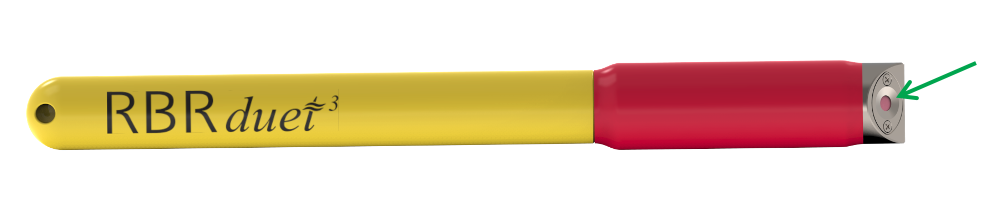
The RBRduet³ T.ODO, and RBRduet³ T.ODO | deep use the optical dissolved oxygen sensor. During deployments, always orient the sensor downwards to reduce debris collecting on the sensing foil and minimise direct sunlight. Store the sensor in the dedicated storage cap, included with the instrument. Rehydrate for five days before deployment. See RBR ODO sensor care and maintenance for more information.
| Parameter | Value |
|---|---|
Measurement range |
0-1000μmol/L |
Calibrated range |
|
Initial accuracy |
|
Resolution |
|
Time constant |
<1s | fast, <8s standard, <30s | slow |
|
Optical dissolved oxygen measurements require pressure correction for highest accuracy. Enter the known absolute pressure value manually in the table under the Parameters tab in Ruskin. |
Dissolved oxygen (DO)
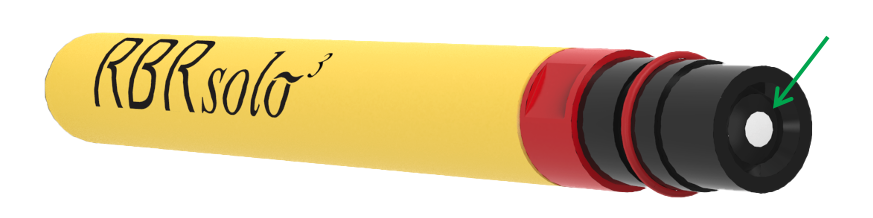
The RBRsolo³ DO uses the OxyGuard galvanic dissolved oxygen sensor. The sensor consumes oxygen from the environment and thus produces most accurate measurements when in a stirred environment. During deployments, always orient the sensor downwards to reduce debris collecting at the membrane. Store the sensor in the dedicated storage cap, included with the instrument.
| Parameter | Value |
|---|---|
Range |
0 to 600% |
Initial accuracy |
±2% oxygen saturation |
Resolution |
1% of saturation |
Time constant |
~10s, 90% step change at 20°C |