Deployment
The RBRtridente and RBRquadrante are robust and reliable multi-channel sensor packages. However, there are several things to keep in mind when deploying them. Deploying your instrument correctly will ensure faultless operation and preserve your data.
The RBRtridente consists of three detector-LED pairs, angled towards each other, as shown in Fig. 9. To distinguish the detectors from the LEDs, there is a machined mark near the row of detector windows, highlighted in Fig. 10.
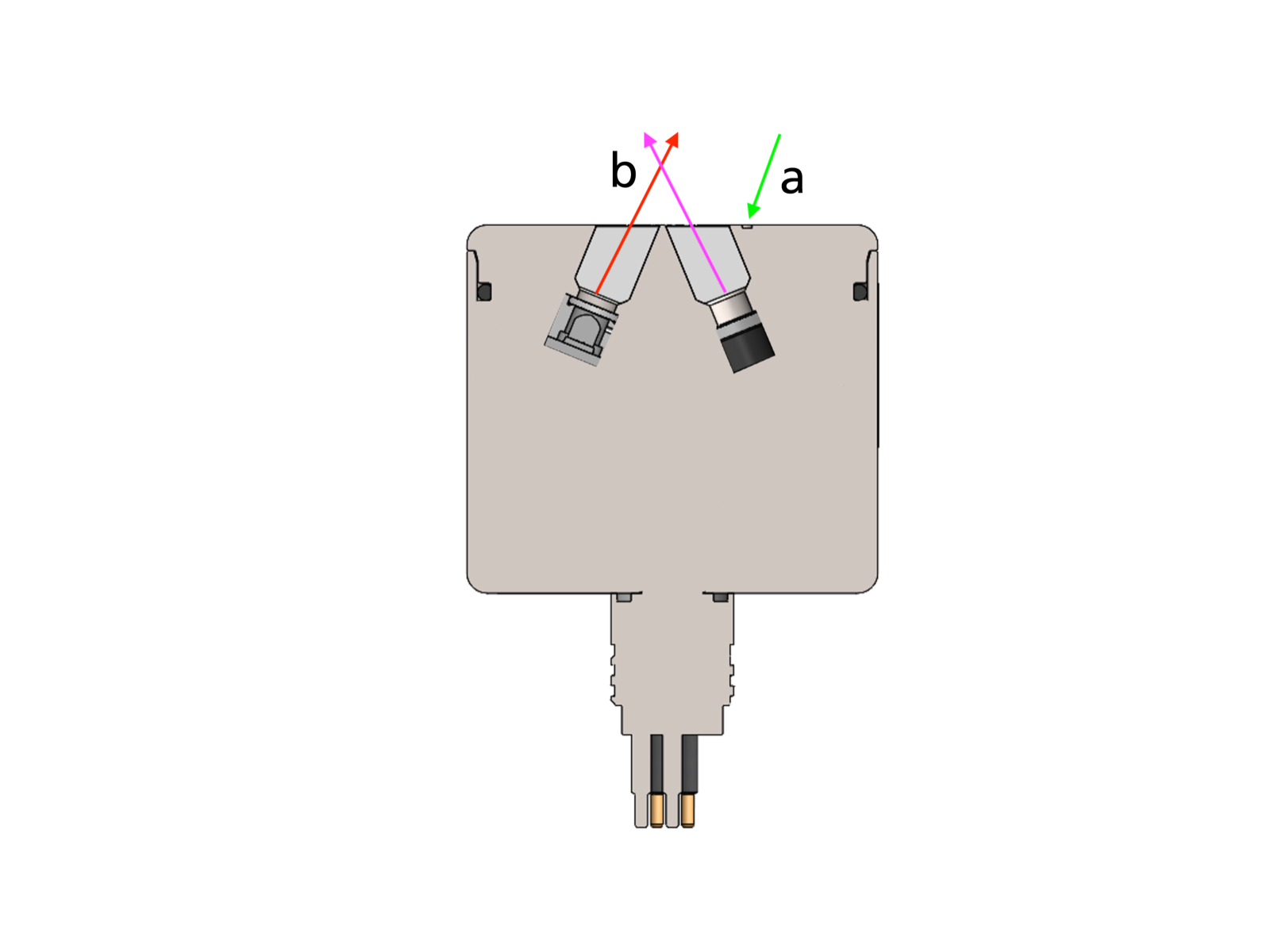
Fig. 9. Cross section of the RBRtridente. (a) Machined mark. (b) Angled detector-LED pair, with red and pink arrows, respectively.
|
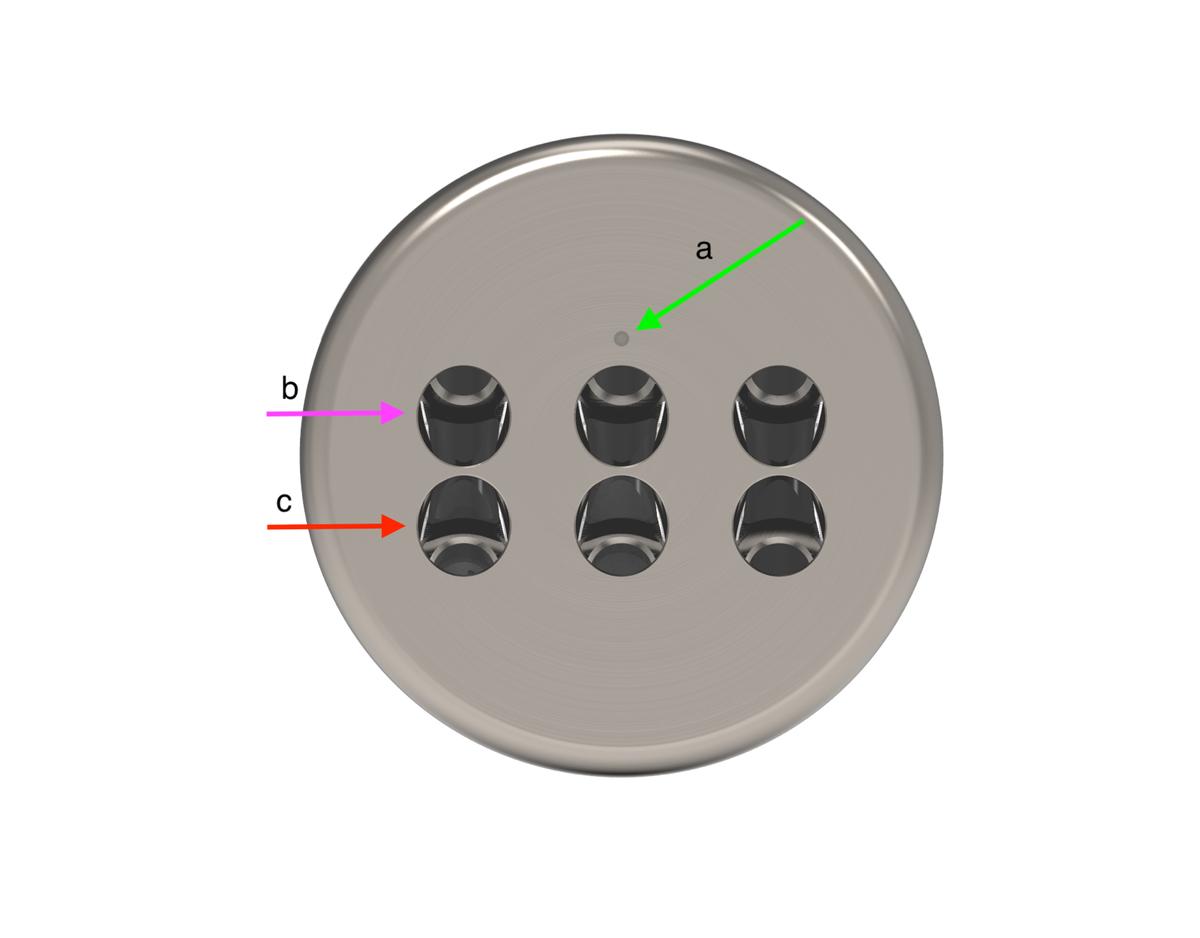
Fig. 10. A detailed view of the face of an RBRtridente. (a) Machined mark. (b) Detector window row (c) LED windows row.
|
Deployment orientation for the RBRquadrante
Deploy the RBRquadrante face up, so that sensors are pointing towards the surface.
Deployment orientation for the RBRtridente
Deploy the RBRtridente face down to avoid exposure to direct sunlight.
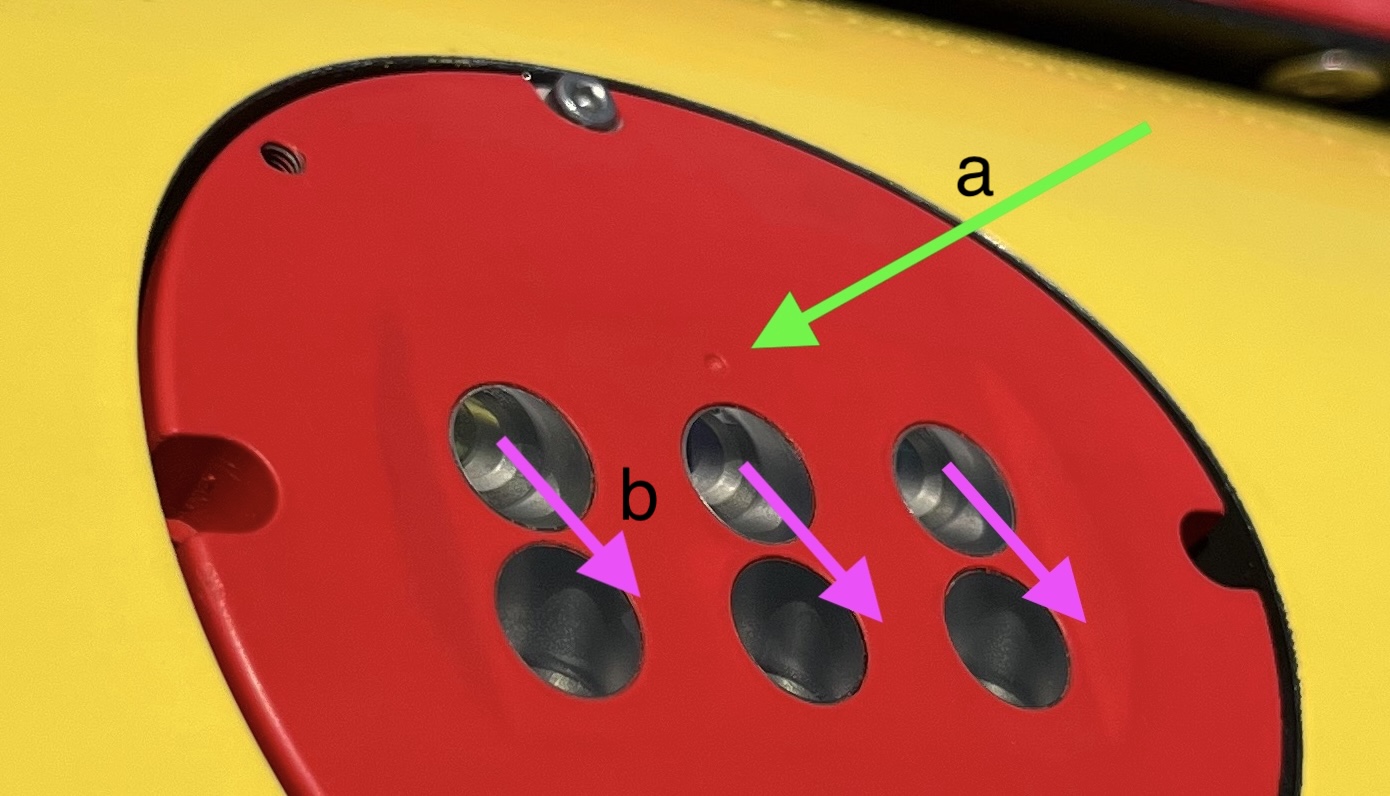
If you have to deploy it horizontally (e.g., on a glider), ensure that the machined mark is on top, so that the detectors are facing down into the water column. Fig. 11 shows an RBRtridente installed horizontally in a glider hull.
Unobstructed volume
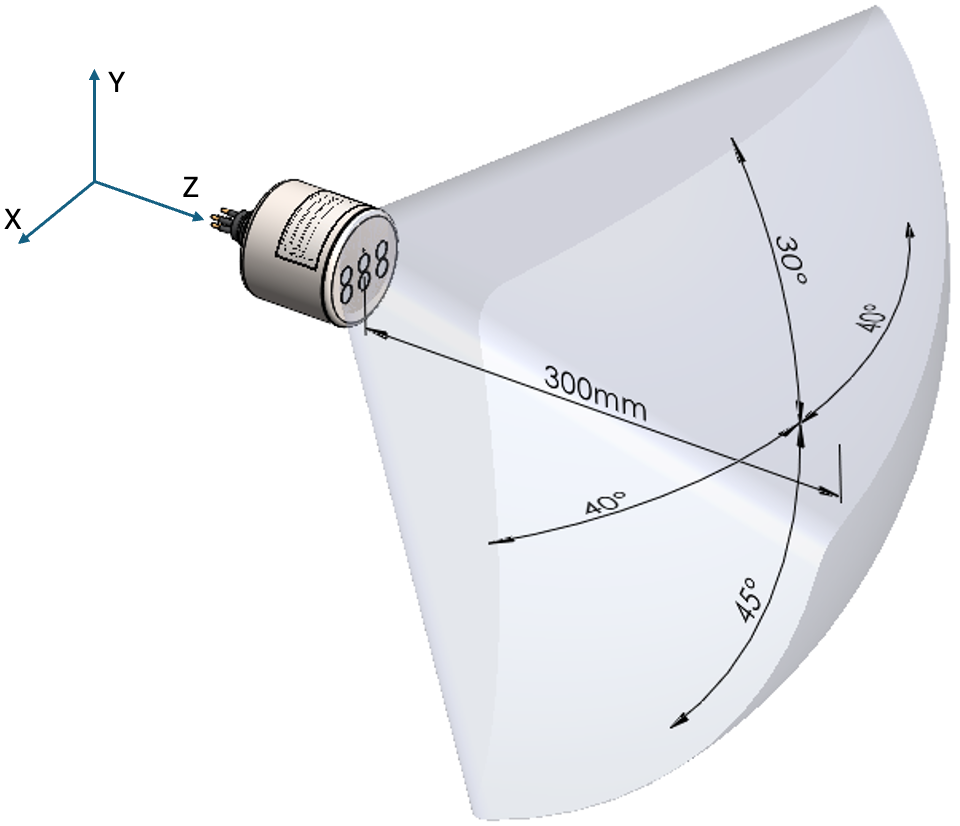
The optical geometry of the RBRtridente constrains the bulk of the measurement to a 1.3ml volume that extends approximately 26mm in front of the sensor. However, the backscatter and turbidity channels are sensitive to repeated light ray reflections originating from a much larger volume. The signal from these light rays, which have undergone secondary or tertiary reflections, is small. Nonetheless, the sensor will still detect objects within this larger measurement volume. Fig. 12 shows the unobstructed volume. Ensure this volume is clear to mitigate erroneous measurements.
Mounting guide
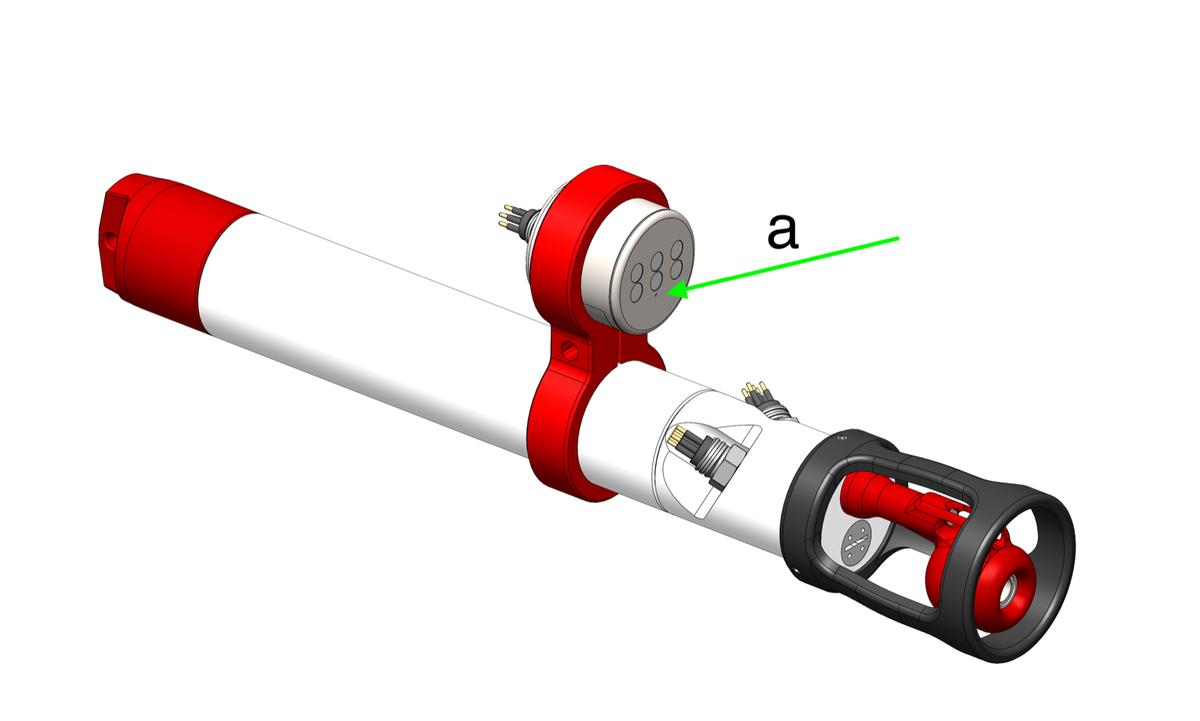
When mounting the RBRtridente, make sure that the unobstructed volume is clear of any obstructions (e.g., sensors, mounting cables or ties, or mooring hardware). If it is mounted facing downwards (e.g., on a logger), it should be oriented with the machined mark closer to the logger, see Fig. 13. This points the detectors away from the instrument body and into the water.
|
RBR recommends testing your setup in water before use to ensure optimal performance. Environmental conditions, such as water clarity and variations in optical channels, may alter the sensitivity to objects within the unobstructed volume. |
Clamping
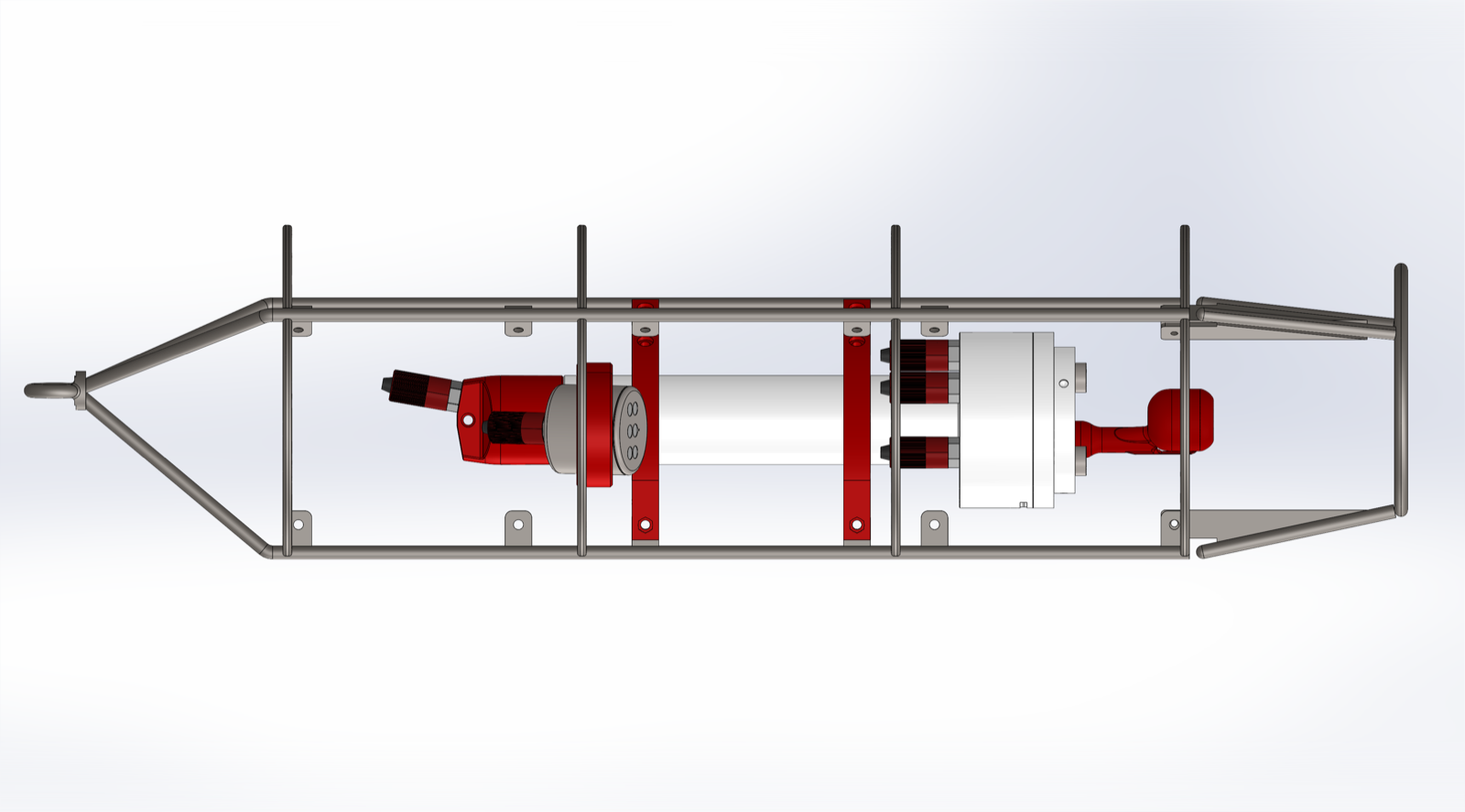
The type of clamp required to hold the RBRtridente will depend on the instrument to which it is clamped. For the RBRconcerto you can use either a straight or an angled clamp. For the RBRmaestro you must use an angled clamp. In both cases, the RBRtridente should be clamped as close to the SEC as possible. When the instrument is in a cage, instead of clamping near the SEC, it is more important to clamp so that the face is approximately in line with the nearest cage rung, as illustrated in Fig. 14.
Flow through chamber
It is possible to mount the RBRtridente in a flow-through chamber with dimensions encroaching into this unobstructed volume. However, the material should be non-reflective to minimise the effect on the backscatter and turbidity measurements.
For example, an RBRtridente mounted at the edge of a matte black chamber that is 130mm in diameter and 150mm in length will not change the background scattering signal, but if this chamber is reflective stainless steel, it can induce a signal of >0.015m-1sr-1 / 6FTU (wavelength dependent).
Removing an offset
The background signal caused by a flow-through chamber or an object in the unobstructed volume can be removed as an offset, provided the water volume scattering function (VSF) or turbidity is <0.045m⁻¹ sr⁻¹ or <20FTU, respectively. For details on how to remove the offset see Ruskin C0 correction: Sensor or Ruskin C0 correction: Logger mounted
Precautions
-
Do not exceed the maximum depth rating.
All RBR sensors are individually rated to a maximum depth in meters, as indicated on the label.
RBRtridente (wet-bay): 6000m
RBRtridente (dry-bay): 1250m
RBRquadrante: 2000m
-
Do not apply physical stress to the housing.
Stress due to improper mounting may cause the RBR sensors to leak, resulting in the loss of valuable data or permanent damage to the electronics.
Any type of clamp or bracket which concentrates the stress on the housing is not recommended for use in mooring, mounting, and/or other deployment.
Contact RBR for proper mooring and mounting clamps suited to your specific application. -
Do not attempt to open the sensor.
All RBR sensors are sealed and cannot be opened by the user. Any attempt to do so will damage the sensor and void all warranty.