CT and CTD instruments
|
This guide focuses on CT- and CTD-only instruments. |
RBR offers several standard instruments dedicated specifically to determining salinity:
-
RBRduo³ C.T - conductivity and temperature
-
RBRconcerto³ C.T.D - conductivity, temperature, and pressure
-
RBRbrevio³ C.T.D - conductivity, temperature, and pressure
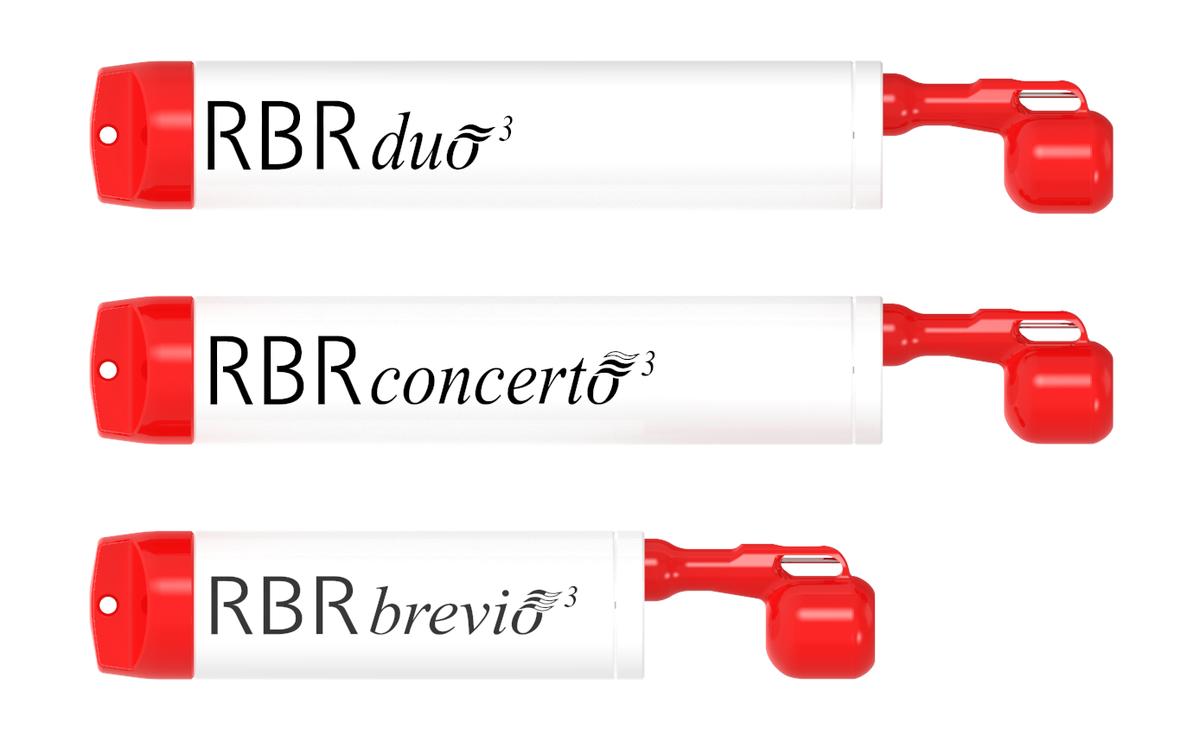
All RBR standard instruments support the following features :
-
High accuracy
-
Extended deployments
-
Large memory
-
Flexible schedules
-
Twist activation
-
USB-C download
-
Realtime communication
-
Wi-Fi
The RBR CT and CTD instruments are uniquely designed to determine salinity by measuring the conductivity and temperature of water. Their rugged inductive cell is not affected by surface contaminants or freezing conditions. For profiling applications, the co-located thermistor reduces salinity spiking, thus increasing data accuracy.
Equipped with a piezoresistive pressure channel, the CTD instruments provide more accurate salinity data when the instrument is sampling at varying depths.
The RBRduo³ C.T, RBRconcerto³ C.T.D, and RBRbrevio³ C.T.D are also available in titanium housing for deep applications ( | deep ), designed to resist all forms of marine corrosion. All RBR instruments within the | deep family provide accurate and stable measurements in the most challenging environments.
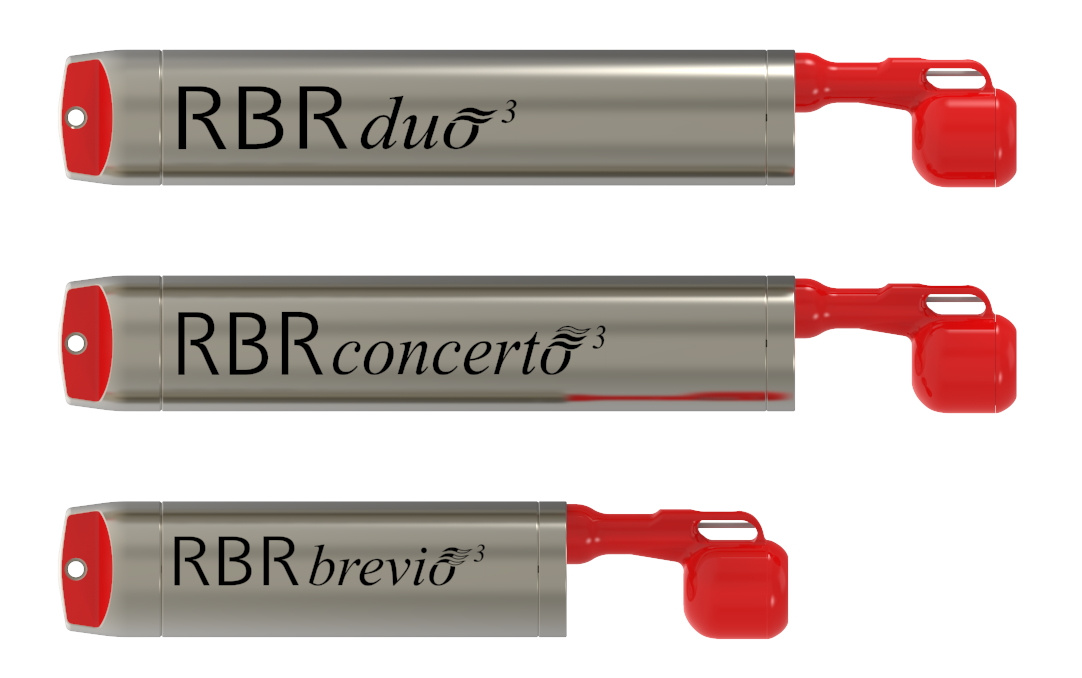
The RBR CT and CTD instruments facilitate optimal measurement schedules, whether moored, towed, or profiling. Select from several | fast sampling variants, such as | fast8, | fast16, | fast32, | tide16, and | wave16, depending on your needs.
The instruments come with a Wi-Fi module and twist activation. Large storage capacity and reliable battery power facilitate long deployments with higher sampling rates. Downloads are quick with USB-C. A dedicated holder makes it simple to replace desiccant before each deployment. The calibration coefficients are stored on the instrument, and only one software tool, Ruskin, is required to operate it. Datasets can be read directly in Matlab, or exported to Excel, OceanDataView®, or text files.
For a detailed description of using the Ruskin software, see Ruskin User Guide: Standard Instruments³.