Physical specifications
Instrument
| Specification | Description |
|---|---|
Max number of readings1 |
240 million |
External power |
4.5 to 30V |
Communications |
RS-232 |
Clock drift2 |
±60 seconds/year |
Housing |
Titanium |
Diameter |
60.3mm |
Length |
~206mm (instrument only) |
Weight |
~1600g in air, ~950g in water |
Depth rating |
2000m |
Sampling rate |
2Hz |
1 Each sample can include multiple readings.
2 The realtime clock is not maintained when there is no power.
Power consumption at 12V
| Specification | Description |
|---|---|
≤1Hz sampling |
22.8mJ per sample |
2Hz sampling |
46mW |
Sleep power |
180μW |
Startup time
Generally, there is no need to power off RBR instruments. The RBRcentauro³ will go to sleep after inactivity, consume virtually no power while on standby, and then wake up instantly when required.
If you turn off the instrument, there will be a delay starting up. Furthermore, you will have to wait for at least two minutes before turning it back on.
-
Elapsed startup time from fully discharged state to functional command interpreter: 4s maximum
-
Elapsed power downtime to complete discharge: 120s minimum
|
Ensure that the instrument is fully discharged before resuming the measurements. Power-cycling the unit for less than 120s may leave the board in an unknown state. In addition, the realtime clock may not be maintained over a power cycle. |
External port
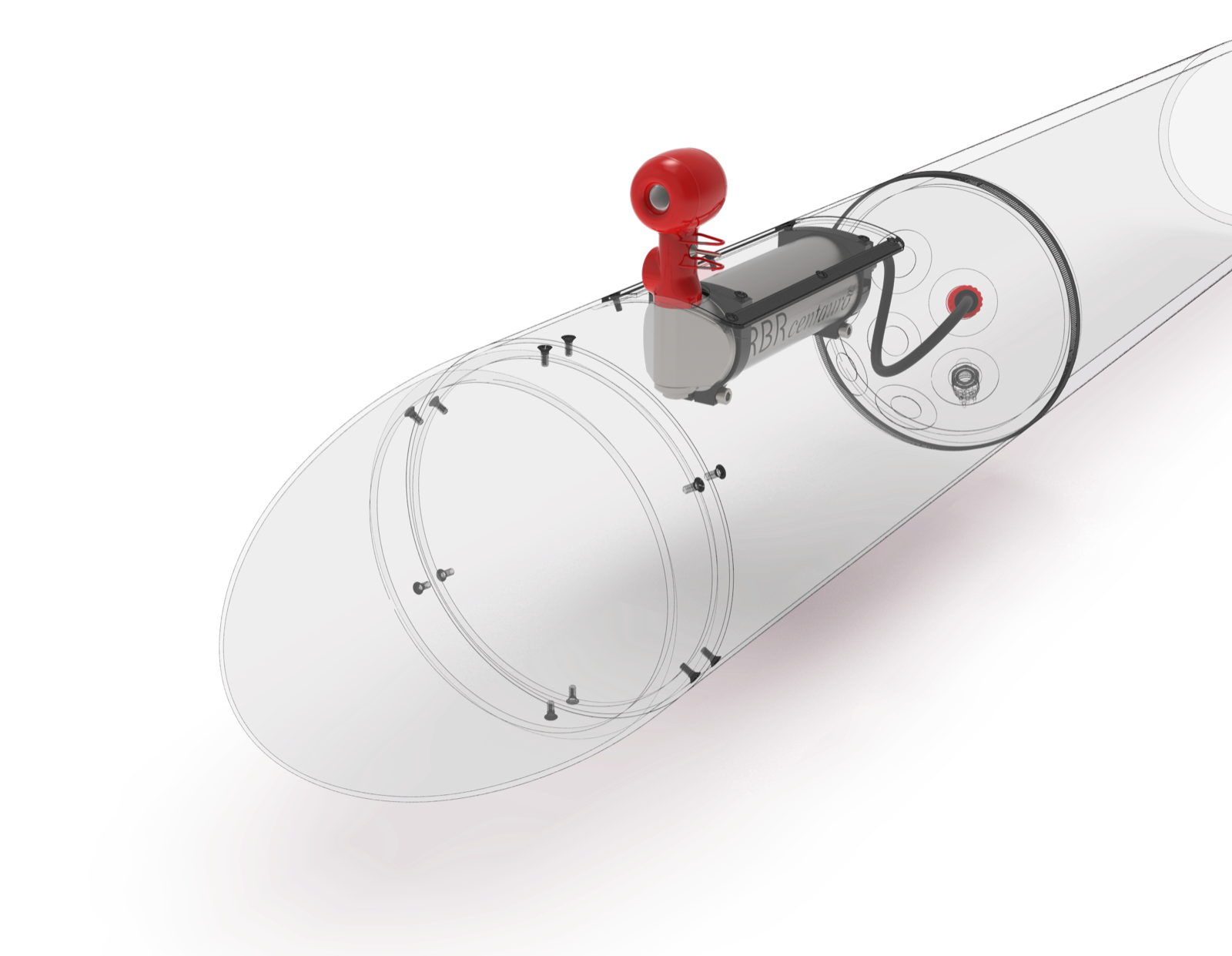
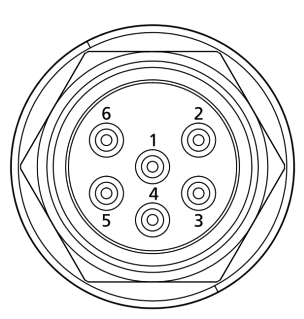
The RBRcentauro³ uses an external MCBH-6-MP connector. It can be used for connecting to an RS-232 underwater extension cable.
External MCBH-6-MP connector pinout
|
|